Calculus Bridge Teeth: Causes, Removal & Prevention for a Healthy Smile in 2025-26
Introduction
Calculus bridge teeth is more common than most people realize. It occurs when the stiffened plaque forms a bridge between teeth. Otherwise, it may cause pain, infection and loss of teeth. Dentists even in the year 2025 continue to caution people about this dental complication that can be avoided.
What Is a Calculus Bridge on Teeth?
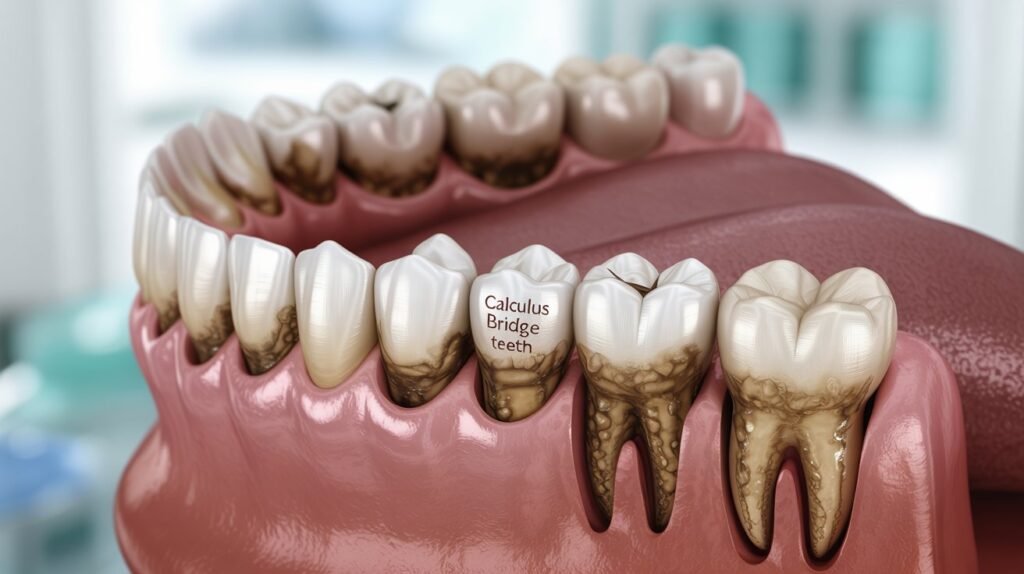
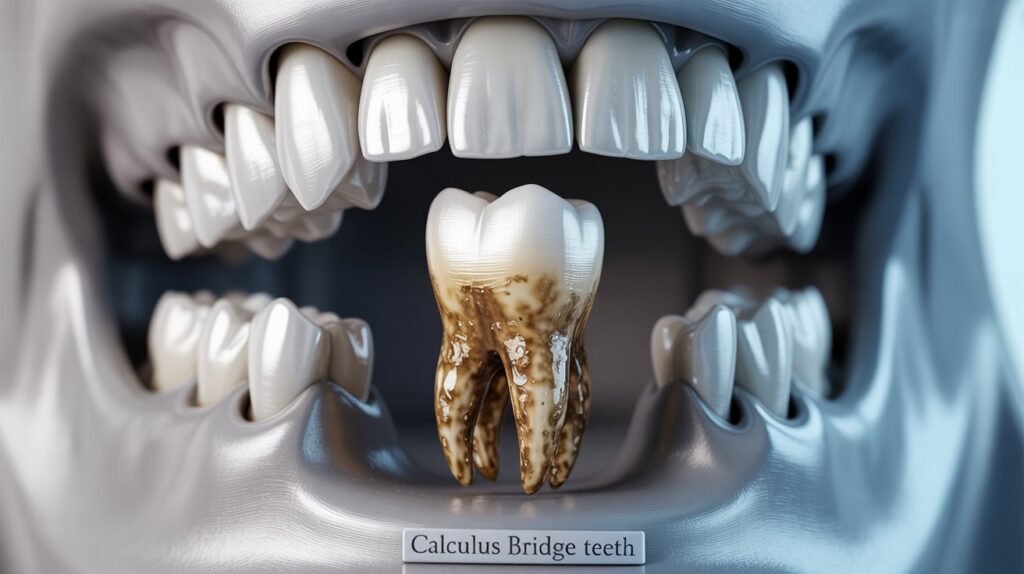
A calculus bridge is when tartar hardens and connects teeth like a wall. This accumulation is rough like soft plaque and it cannot be brushed off. It usually looks yellow, brown, or black. Dentists say it’s one of the most dangerous dental issues.
How Does a Calculus Bridge Form?
It begins with plaque which is an adhesive layer on the teeth. Plaque remains excessively long and it forms tartar. If not removed, tartar spreads and creates a bridge. Risk factors include:
- Poor brushing habits
- Sugary diet
- Smoking
- Irregular dental visits
Signs & Side Effects of Calculus Bridge Teeth
Ignoring calculus bridge teeth leads to serious damage. Common signs are:
- Constant bad breath
- Bleeding gums while brushing
- Receding gum line
- Cavities and pain
- Teeth shifting or loosening
Dentists stress these are early warnings that must not be ignored.
Calculus Bridge Teeth Removal
Removal is not possible at home. Dentists use professional scaling and root planing. These tools scrape off hard deposits safely. Some patients may need ultrasonic cleaners. Home tricks like salt or baking soda cannot remove calculus bridges. Only trained dental cleaning prevents lasting harm.
At-Home Care vs Professional Treatment
Many people try DIY tricks, but experts say they don’t work. Let’s compare both approaches:
| Method | Works for Plaque | Works for Calculus | Safe for Teeth |
|---|---|---|---|
| Brushing & flossing | ✅ Yes | ❌ No | ✅ Yes |
| Salt rinses | ✅ Mild effect | ❌ No | ✅ Safe |
| Dental scaling | ❌ No | ✅ Yes | ✅ Safe |
| Ultrasonic cleaning | ❌ No | ✅ Yes | ✅ Safe |
Professional help is always best.
Prevention Tips for Calculus Bridge Teeth
Prevention is easier than painful treatments. Dentists recommend:
- Brush twice daily for 2 minutes
- Use fluoride toothpaste
- Floss once a day
- Cut down on sugary drinks
- Visit dentist every 6 months
- Good health practices prevent the transformation of plaque into tartar.
Calculus Teeth Bridging – Is It the Same Thing?
Yes, calculus bridge teeth and calculus teeth bridging mean the same. Both describe tartar forming a hard wall between teeth. People often confuse it with dental bridges, but that is different. Dental bridges replace missing teeth, while calculus bridges harm existing ones.
Real-Life Example
In 2024, a patient in Karachi waited too long to treat calculus bridge teeth. Within a year, they developed gum infection and tooth loss. After expensive surgery, they admitted prevention would have saved money. This shows ignoring calculus bridges can destroy oral health.
Impact on Overall Health
Calculus bridges don’t just hurt teeth. Studies in 2025 show links between gum disease and heart problems. Untreated tartar increases infection risk in the bloodstream. It can also cause diabetes complications. That’s why dentists say mouth health is connected to body health.
Misconceptions About Calculus Bridges
Many believe brushing harder removes calculus, but it doesn’t. Others think home remedies like vinegar or lemon help, but they only damage enamel. Some think only older people get it, but even teenagers develop calculus bridges. Myths delay treatment and make the problem worse.
Professional Treatments in 2025
Dentists today use advanced methods. Ultrasonic scaling is fast and less painful. Laser treatment also removes buildup without much bleeding. Modern tools save time and protect gums. In 2025, dental clinics focus on pain-free cleaning so patients don’t fear calculus bridge treatment anymore.
Why Ignoring It Is Dangerous
Leaving calculus bridge teeth untreated is risky. It may cause:
- Severe gum infections
- Tooth loosening and loss
- Painful abscess
- Expensive surgeries later
What starts as a simple tartar problem can turn into lifelong dental damage. Timely cleaning is always cheaper and safer.
Best Foods to Prevent Calculus Bridge Teeth
Diet plays a huge role. Dentists suggest:
- Raw fruits and vegetables.
- Calcium as a source of cheese and milk.
- Green tea to fight bacteria Nuts and seeds for minerals Processed sugar, Sticky candy and soda should be avoided.
- Healthy food preserves plaque.
Avoid sticky candies, soda, and processed sugar. Healthy food keeps plaque under control.
Daily Routine Checklist
Here’s a quick routine to protect against calculus bridge teeth:
- Brush every morning and night
- Floss before sleeping
- Use antibacterial mouthwash
- Drink plenty of water
- Chew sugar-free gum after meals
Small daily steps stop plaque from turning into dangerous tartar.
Cost of Treatment in 2025
Prices vary worldwide. On average:
- Regular dental cleaning: $75–$200
- Deep cleaning for calculus bridges: $150–$300 per session
- Advanced laser treatment: $500+
These expenses increase in case teeth are damaged. It is always cheaper to prevent than to cure.
Prevention in Children and Teens
Parents must watch kids’ dental habits. Children can also get calculus bridges if they skip brushing. Dentists in 2025 recommend:
- Supervise brushing till age 7
- Limit candies and sodas
- Regular checkups from age 3
Preventive treatment is economical.
When to See a Dentist Immediately
Seek dental help if you notice:
- Yellow or brown hard layers on teeth
- Gum swelling or bleeding
- Loose or shifting teeth
- Persistent bad breath
These signs show calculus bridges have formed. Waiting only makes treatment harder and more expensive.
What is Calculus Bridge Teeth?
A calculus bridge on teeth is a thick, hard layer of tartar (hardened plaque) that builds up and connects across several teeth, almost like a “bridge.”
Conclusion
Calculus bridge teeth may look harmless, but they can destroy your smile. They start with simple plaque but end with painful damage if ignored. Professional cleaning and daily prevention are the only answers. Take action early, because strong teeth mean confidence, health, and a happy life.